Singapore
Singapore Weather Month by Month: The Best Time to Visit, and What to Pack
Singapore weather explained: monsoon seasons, the wettest and driest months, when the haze appears, what 'feels like 38' really means, and the best months to visit, including Grand Prix week in October.
 source: CÉ LA VI
"Singapore weather" is one of the most searched phrases about the country, and the honest answer disappoints people: it is much the same every month. Sitting almost exactly on the equator, Singapore has no summer or winter, only wetter and drier stretches of a permanently warm, permanently humid year.
That does not mean the month you pick is irrelevant. It changes how much rain you dodge, how heavy the air feels, and how much you pay for a hotel.
Singapore weather at a glance
Daytime highs sit between 31 and 33°C almost every day. Nights fall to about 24-26°C and rarely lower. Relative humidity runs above 80 percent for much of the day, which is why 32 degrees in Singapore feels considerably heavier than 32 degrees in a dry climate. Annual rainfall is well over two metres, spread across the whole year rather than concentrated in one season.
There is no dry season in the way Thailand or Vietnam have one. Even the driest month averages rain on around ten days.
The two monsoons
Northeast Monsoon, roughly December to March. The wet end of the year. December and January bring prolonged, sometimes all-day rain, with occasional cooler and windier spells that locals genuinely notice. By February the monsoon enters a drier phase, which is why February is consistently the sunniest month of the year.
Southwest Monsoon, roughly June to September. Hotter and drier overall, with sharp squally storms, often in the pre-dawn or early morning hours, that clear by breakfast. This is also the window when smoke haze from regional land clearing can occasionally drift across, though this varies enormously year to year.
Inter-monsoon periods, April-May and October-November. Light winds, intense heat, and the classic Singapore pattern of a sudden thunderous downpour in the late afternoon, followed by a rinsed, glittering evening.
Month by month
| Month | What it is like | Verdict |
|---|---|---|
| January | Wet, one of the rainiest months, occasional cooler spells | Good value, pack rain gear |
| February | Driest and sunniest month, Chinese New Year | Best overall |
| March | Warm, drier, festival season | Excellent |
| April | Very hot, humid, afternoon storms begin | Good, hydrate |
| May | Hottest stretch of the year | Fine, plan indoor midday |
| June | Drier, hot, school holiday crowds | Good |
| July | Drier, hot, Singapore Food Festival | Good |
| August | Drier, hot, National Day celebrations | Good |
| September | Warm, some haze risk, storms return | Fine |
| October | Hot, humid, evening downpours, Grand Prix | Busy and brilliant |
| November | Wettest month of the year | Cheapest, wettest |
| December | Wet, festive, year-end crowds | Expensive and rainy |
 source: The Fullerton Bay Hotel
What the rain is actually like
Understanding the shape of Singapore rain matters more than the monthly totals. A typical wet day is not grey from morning to night. It is bright and heavy in the morning, the sky blackens sometime after two, an hour of tropical downpour arrives with genuine thunder, and by six the streets are steaming and the evening is clear.
This is why locals plan around it rather than avoid it. Museums, malls, hawker centres and the Gardens by the Bay conservatories all absorb an afternoon comfortably. The city is also unusually well sheltered: covered walkways link most MRT stations to nearby buildings, and the underground mall network runs for kilometres beneath Orchard and Marina Bay.
Carry a folding umbrella. Every convenience store sells one for a few dollars when you inevitably forget.
What to pack
Two things surprise first-time visitors. The first is that you will change clothes more often than you planned, so quick-drying fabrics beat cotton. The second is that indoor Singapore is cold: offices, malls, cinemas and restaurants are air-conditioned hard, and a light long-sleeve layer is genuinely useful.
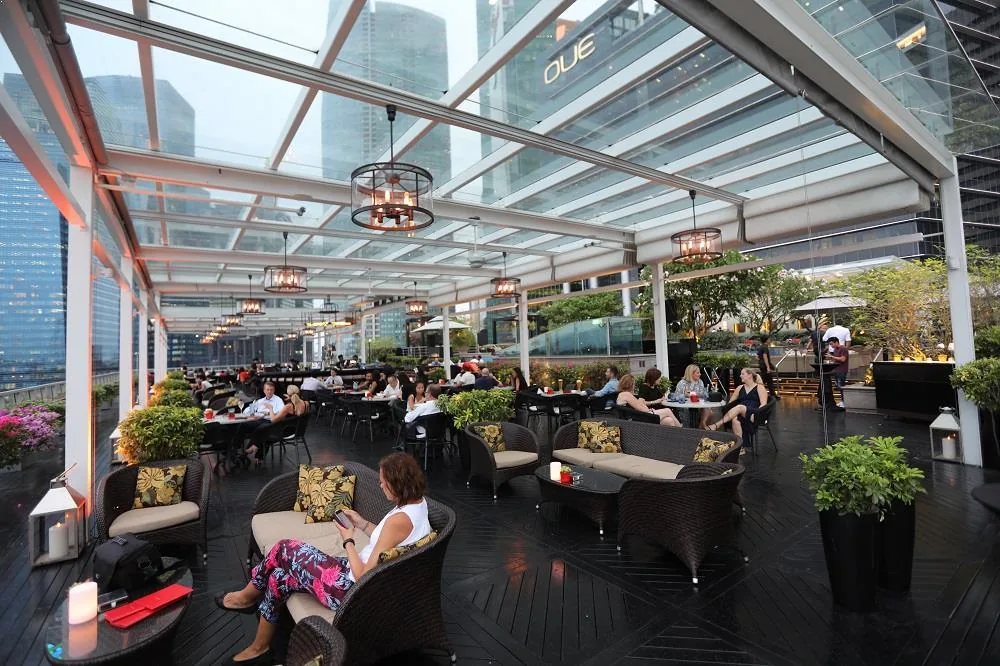
For evenings out, note that the city's better rooftops and clubs enforce smart-casual dress codes regardless of the heat, so pack accordingly rather than assuming shorts will pass the door.
October, and why it is the week to pick
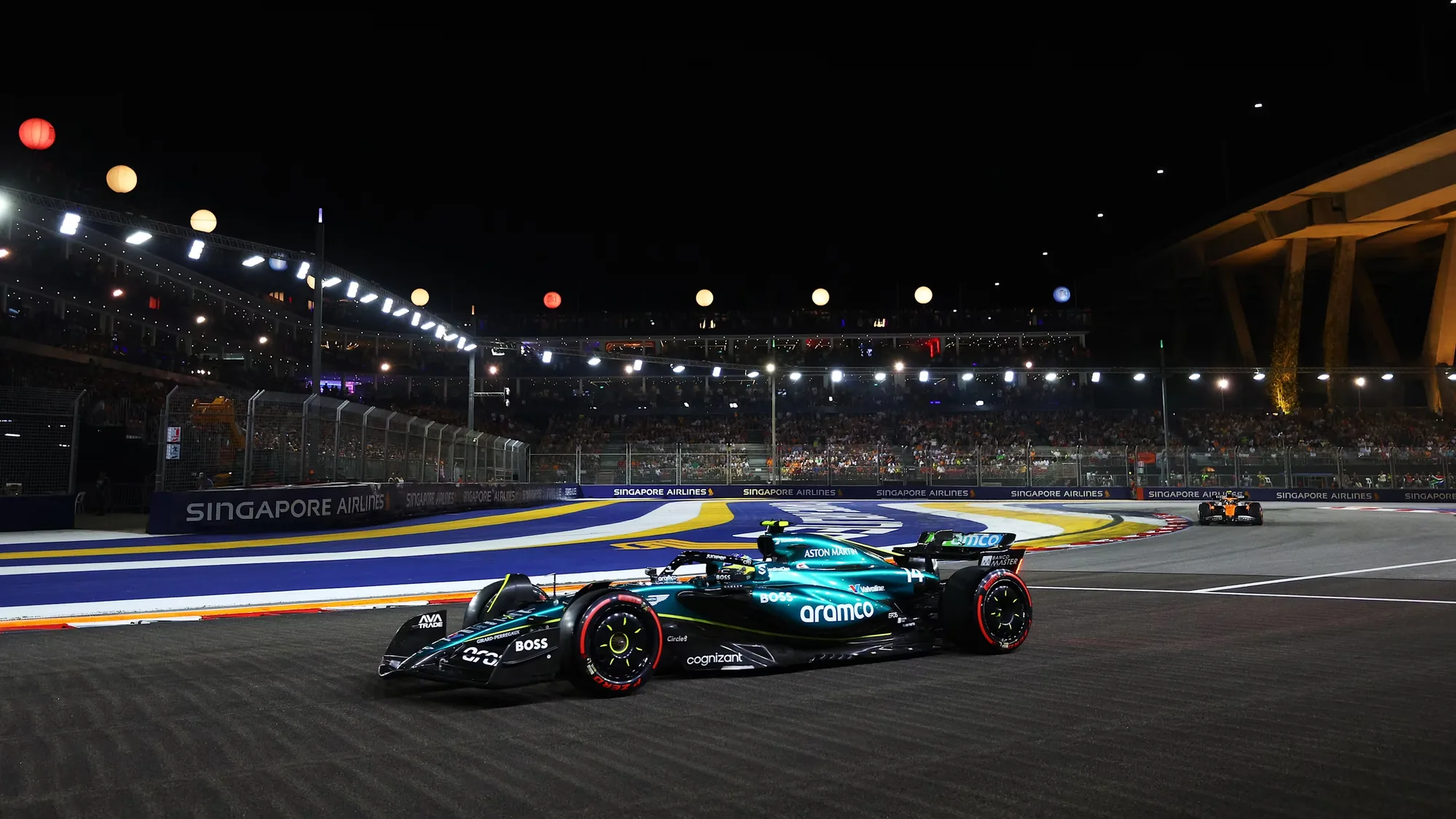
October is not the driest month or the coolest. It is the best week of the year to be in Singapore anyway, because the Formula 1 Grand Prix runs 9-11 October 2026 on the Marina Bay street circuit. Racing under floodlights was invented here partly because of the climate: the sun is down, the heat is marginally more bearable, and the humidity gives the whole city a cinematic haze under the lights.
Expect around 31 degrees, high humidity into the night, and a real chance of showers, which have shaped more than one Singapore Grand Prix. Dress light, carry a rain layer, and accept that everyone at the circuit is equally damp.
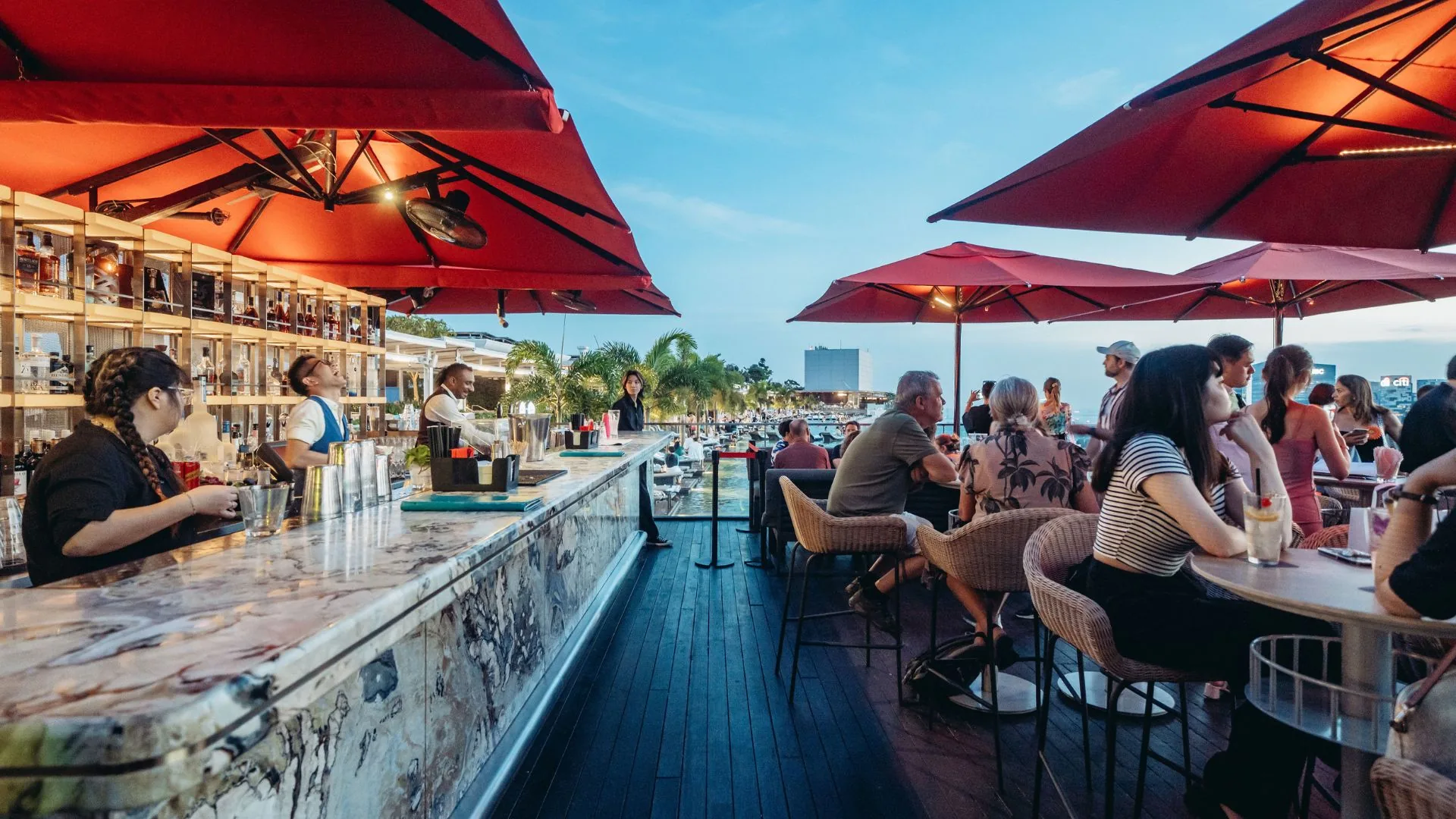
That week, Grand Night takes over one of the city's finest rooftops for an evening of world-class music, performances and networking with APAC's top founders, investors and innovators, high above the circuit, where the weather is somebody else's problem.
Climate figures are long-run averages. For live conditions and warnings, check Singapore's Meteorological Service forecasts before heading out.
Frequently asked questions
What is the best time of year to visit Singapore?
February is generally the driest and sunniest month, and the stretch from February to April is the most comfortable overall. June to September is drier than the year-end but hotter. November and December are the wettest months.
Does it rain every day in Singapore?
Not every day, but rain is possible on any day of the year. Most of it arrives as short, intense afternoon or early-evening downpours that pass within an hour, rather than all-day drizzle.
What is Singapore's monsoon season?
The Northeast Monsoon runs roughly December to March and brings the heaviest rainfall, especially in December and January. The Southwest Monsoon runs roughly June to September, with shorter squally storms, often in the early morning.
How hot does Singapore get?
Daytime highs sit around 31 to 33 degrees Celsius all year with very little seasonal variation, and nights rarely drop below 24. Humidity above 80 percent means it usually feels several degrees hotter than the thermometer reads.
What should I pack for Singapore?
Light breathable clothing, a compact umbrella or rain shell, comfortable walking shoes that dry quickly, sunscreen, and one warmer layer for aggressively air-conditioned malls, restaurants and cinemas.
What is the weather like in Singapore in October for the Grand Prix?
Hot and humid with a real chance of afternoon or evening showers as the inter-monsoon period sets in. Race sessions have run in the wet before. Expect around 31 degrees by day, high humidity at night, and carry a light rain layer.